



At a glance
ISA season is a time when many providers launch new products or offer their most competitive rates in an attempt to entice customers looking to use up the last of their allowance before the tax-year ends.
Some providers also try to attract ‘early-bird’ savers wanting to invest their allowance quickly once it resets at the start of the new tax-year.
No, you can’t carry across any unused ISA allowance into the next tax-year.
The ISA allowance is the combined total you can save across all ISAs within a single tax-year and currently stands at £20,000.
It automatically resets at the start of each new tax-year which means you can’t carry across any unused allowance.
Those looking to shelter as much of their hard-earned cash from tax as possible should therefore look to utilise their allowance before the tax-year ends on 5 April.
The 2026/27 tax-year is the last year those under 65 can put away up to £20,000 in cash ISAs, which could make it all the more important to maximise your contributions.
While there are no set dates for ISA season, it typically occurs annually throughout March and April as one tax-year ends (5 April) and another begins (6 April). However, it can start as early as February depending on the state of the savings market and customer appetite.
ISA season is a helpful reminder to ‘use or lose’ your annual allowance before the tax-year ends; as any outstanding amount can’t be carried across into the next tax-year, failing to use your allowance could mean missing out on tax-free interest on your savings.
But, even if you already have an ISA, the season also presents an opportunity to enhance your savings by switching to another provider offering more competitive returns.

When moving funds from one ISA to another, it’s important to use an ISA transfer to retain your tax-free benefits and to avoid using up your ISA allowance unnecessarily.
Anyone can open an ISA but those who stand to benefit the most are savers who earn enough interest from a traditional savings account to breach their Personal Saving Allowance (PSA).
While the £1,000 yearly limit on earning tax-free interest will be sufficient for some basic-rate taxpayers, frozen Income Tax bands and high interest rates mean many are being dragged up the tax ladder and are seeing their allowances slashed:
| Income Tax Bands | Personal Savings Allowance |
| Basic rate | £1,000 |
| Higher rate | £500 |
| Additional rate | £0 |
For additional-rate taxpayers, as well as basic and higher-rate taxpayers who exceed their savings allowance, an ISA is just one way to shelter returns from the taxman.
You can open an ISA at any point in the year – providing you haven’t already used up your entire ISA allowance.
If you’ve already maxed out your ISA allowance, you’ll need to wait until it automatically resets at the start of the next tax-year (6 April) before opening another account. However, this is often when some of the most competitive rates can be found, as providers know there’ll be many savers eager to use their refreshed allowance.
There’s no limit on the total number of ISAs you can open during ISA season - or any other time of the year, for that matter.
That being said, some providers may impose their own restrictions on the number of accounts you can open and pay into with them, so it’s important to check any terms and conditions before applying.
There are also additional rules that apply to Lifetime ISAs and Junior ISAs; find out more with our guide to opening and managing multiple ISAs.
Whether you can contribute to an existing ISA during ISA season depends on the type of account you hold.
More flexible accounts, such as easy access or notice ISAs, generally allow additions at any time without restriction. In contrast, some fixed ISAs only permit further deposits for a limited window after opening, while others prohibit adding to your pot entirely. For specific account information, visit our charts and select ‘view further details’ next to a listing, or reach out to your provider.
But, when adding to your account, be careful not to exceed your £20,000 annual ISA allowance.
You don’t have to contribute to an ISA during ISA season, but bear in mind this could mean missing out on more competitive rates or attractive new deals.
Furthermore, if you don’t pay into an ISA at any other time of the year (and instead hold your money in a traditional savings account), you risk being taxed on the interest earned if you exceed your PSA.
If you don’t already have an ISA, ISA season could be a good time to consider opening one as there can be plenty of attractive rates to choose from. Furthermore, by opening an ISA at the start of a tax-year, you’ll have the full financial year to use up your allowance.
However, competitive rates and their timings are never guaranteed, so there isn’t necessarily a best time to open an ISA. As it’s possible for providers to amend their offerings at other points in the year, it’s good practice to regularly review top rates and open an account when it’s right for you.
It’s not just competitive rates or new products to look out for; platforms and providers sometimes introduce cashback offers and prize draws to encourage deposits.
While such deals may increase in prominence towards the end of the tax-year, they’re not exclusive to ISA season and it’s possible for offers to appear at other times.
While the market may be less competitive once ISA season ends, there’s nothing to stop providers from upping their rates or launching attractive new products throughout the rest of the year.
If you opened an ISA during ISA season, it’s important to review your account and the top rates regularly to make sure you’re receiving a competitive return – particularly if it offers a variable rate (which can go up or down).
The end of one tax-year and the start of another can be an important time of year for your savings. Below are some steps that could help you make the most out of ISA season:
Before ISA season gets underway, it’s a good idea to take stock of your current situation. If you’re not at risk of earning enough interest to exceed your Personal Savings Allowance (and having to pay tax on your savings), you may find that you don’t actually need an ISA and a traditional savings account could offer better returns.
Competition in the ISA market usually intensifies throughout March and April as the end of the current tax-year approaches. However, ISA season can start as early as February so it’s important to keep a close eye on the best rates to avoid missing out.
Keep in mind that offers can be withdrawn just as quickly as they appear, so you may need to act fast to take advantage of an attractive deal.
It should also be noted that, while the tax-year officially ends at midnight on 5 April, many providers will have their own deadlines in place to open an account and/or make final deposits. Any money that isn’t visible in your account at 11:59pm on 5 April is unlikely to form part of the current tax-year’s ISA allowance, so it’s wise not to leave opening or adding to an ISA until the last minute.
Your work isn’t done once ISA seasons ends; to make sure you continue to earn a competitive return, it’s important to review your accounts regularly and consider switching if more attractive options are available. Remember, providers can launch new accounts or increase their rates at any time of the year (not just ISA season!).
Our dedicated ISA charts are regularly updated throughout the day to show the best fixed, easy access and notice cash ISA rates currently available. Use our charts during ISA season – or at any other time of the year – to compare accounts from across the whole of the ISA market.
Also read our ISA roundup for more information on the most competitive accounts and subscribe for free to our Savers Friend newsletter for regular updates on the latest changes from across the savings and ISA markets.
There is not set month in which ISAs start; while there may be increased activity in the market between February and April, you can open an ISA in any month of the year (so long as you haven’t exceeded your annual allowance).
As for the ISA allowance, this automatically resets each April. For more information, read our guide on how the ISA allowance works.
While it may be tempting to wait until ISA season to open an ISA, competitive returns can’t be guaranteed and there’s nothing to stop providers launching attractive deals at other points of the year. In the meantime, you might be at risk of paying tax on the returns from your savings if you exceed your PSA. Good practice is to review top rates regularly.
However, if you’ve already utilised all of this year’s ISA allowance, you’ll need to wait for it to reset in April before you can make any further deposits into an ISA.
Yes – you can continue to contribute to your Lifetime ISA (LISA) throughout ISA season so long as you haven’t exceeded your annual ISA allowance or the £4,000 cap on LISA deposits per tax-year.
This depends; each provider will have its own deadline to open an account, initiate a transfer and/or make any contributions into an ISA before the tax-year ends (contact your bank or building society for specific details).
Nevertheless, it’s wise to give yourself plenty of time when making final deposits as any money not visible in your account at 11:59pm on 5 April won’t count towards the current tax-year’s ISA allowance.

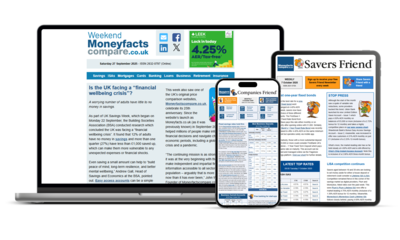
All of our newsletters are available free by email to all Moneyfactscompare.co.uk users.
Send me Weekend Moneyfactscompare, Savers Friend, and Companies Friend.
Disclaimer: This information is intended solely to provide guidance and is not financial advice. Moneyfacts will not be liable for any loss arising from your use or reliance on this information. If you are in any doubt, Moneyfacts recommends you obtain independent financial advice.

Moneyfactscompare.co.uk will never contact you by phone to sell you any financial product. Any calls like this are not from Moneyfacts. Emails sent by Moneyfactscompare.co.uk will always be from news@moneyfacts-news.co.uk. Be ScamSmart.
Moneyfactscompare.co.uk will never contact you by phone to sell you any financial product. Any calls like this are not from Moneyfacts. Emails sent by Moneyfactscompare.co.uk will always be from news@moneyfacts-news.co.uk. Be ScamSmart.
Moneyfactscompare.co.uk will never contact you by phone to sell you any financial product. Any calls like this are not from Moneyfacts. Emails sent by Moneyfactscompare.co.uk will always be from news@moneyfacts-news.co.uk. Be ScamSmart.
Moneyfactscompare.co.uk will never contact you by phone to sell you any financial product. Any calls like this are not from Moneyfacts. Emails sent by Moneyfactscompare.co.uk will always be from news@moneyfacts-news.co.uk. Be ScamSmart.
Moneyfactscompare.co.uk will never contact you by phone to sell you any financial product. Any calls like this are not from Moneyfacts. Emails sent by Moneyfactscompare.co.uk will always be from news@moneyfacts-news.co.uk. Be ScamSmart.
Moneyfactscompare.co.uk will never contact you by phone to sell you any financial product. Any calls like this are not from Moneyfacts. Emails sent by Moneyfactscompare.co.uk will always be from news@moneyfacts-news.co.uk. Be ScamSmart.
