


Eligible deposits with UK institutions are protected by the FSCS up to £120,000 per person per institution.
Who owns whom?
Find out which banks and savings account providers operate under which banking license with our who owns whom guide, helping savers work out to what degree their savings are protected by the FSCS.
Disclaimer*Data updated hourly, every day between 9am and 5pm.
Applicants must be a UK resident. All rates subject to change without notice. Please check all rates and terms before investing or borrowing. Accounts available to the institution’s existing customers only are not included in our search results.
Interest Earned
This is an estimate of how much interest you could earn in the first year (or for the term of the product if this is less than one year). It does not take into account your personal circumstances so the actual amount received may differ. The calculation is based on the gross rate; takes into consideration the interest paid frequency and includes the following assumptions:
Links like ‘Go To Provider's Site’ or ‘Speak to a Broker’ or clicking on the ‘Provider Logo’ or ‘Product Name’ connect you to providers or brokers we work with, for which we may receive a commission if you click or apply.
Favourites
Clicking the heart icon marks a product as a favourite for 14 days (if cookies are enabled), allowing you to filter and sort favourites at the top of the list.
60-day notice savings accounts may be right for you if you don’t mind giving some notice to access your funds, but you don’t want to lock your money away in a fixed rate bond. They can be ideal for those who can comfortably plan ahead or who have a specific savings goal in mind, and because they’re variable rate accounts, additional deposits can be made at any point, making them particularly suitable for those who want to build up their savings pot.
However, the withdrawal restrictions mean it’s essential to have suitable emergency savings elsewhere, and it’s important to consider your options so you know you’re making the right decision. Read our guide on choosing the right type of savings account to help.
In order to withdraw your money, you’ll need to give 60 days’ notice to your savings provider, after which the money will be released. Typically, you’d be able to withdraw the money via an account you previously nominated. Just make sure to check the terms of your particular deal, as some won’t allow partial withdrawals, in which case the full balance will need to be withdrawn and the account closed.
While most accounts expect you to give sufficient notice before you can withdraw your funds, a few will allow earlier access, though this will usually be subject to an interest penalty (typically equating to 60 days’ loss). This kind of flexibility could be useful for those who may need to access funds in an emergency, but can have a significant impact on the amount of interest earned, so make sure to factor this in when choosing between deals.
If you don’t want to give quite so much notice to access your cash, an account with a shorter term could offer a great alternative. Notice periods are available from as little as seven days while still offering competitive returns. Alternatively, you may be willing to give even more notice to secure a higher interest rate (bearing in mind that in the current climate this may not always be the case), and there are plenty of options here too. Check out the best notice accounts to see the options available.
Other savings account options can include fixed rate bonds for those who want to lock away a lump sum, or easy access accounts for complete flexibility. Start the process and compare rates by using our charts to find the best deal for you.


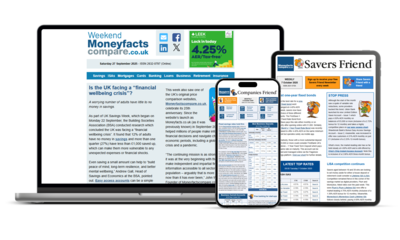
All of our newsletters are available free by email to all Moneyfactscompare.co.uk users.
Send me Weekend Moneyfactscompare, Savers Friend, and Companies Friend.

Moneyfactscompare.co.uk will never contact you by phone to sell you any financial product. Any calls like this are not from Moneyfacts. Emails sent by Moneyfactscompare.co.uk will always be from news@moneyfacts-news.co.uk. Be ScamSmart.
Moneyfactscompare.co.uk will never contact you by phone to sell you any financial product. Any calls like this are not from Moneyfacts. Emails sent by Moneyfactscompare.co.uk will always be from news@moneyfacts-news.co.uk. Be ScamSmart.
Moneyfactscompare.co.uk will never contact you by phone to sell you any financial product. Any calls like this are not from Moneyfacts. Emails sent by Moneyfactscompare.co.uk will always be from news@moneyfacts-news.co.uk. Be ScamSmart.
Moneyfactscompare.co.uk will never contact you by phone to sell you any financial product. Any calls like this are not from Moneyfacts. Emails sent by Moneyfactscompare.co.uk will always be from news@moneyfacts-news.co.uk. Be ScamSmart.
Moneyfactscompare.co.uk will never contact you by phone to sell you any financial product. Any calls like this are not from Moneyfacts. Emails sent by Moneyfactscompare.co.uk will always be from news@moneyfacts-news.co.uk. Be ScamSmart.
Moneyfactscompare.co.uk will never contact you by phone to sell you any financial product. Any calls like this are not from Moneyfacts. Emails sent by Moneyfactscompare.co.uk will always be from news@moneyfacts-news.co.uk. Be ScamSmart.
