

Today's best fixed rate bonds
We found 43 PRODUCTS in total, of which 25 are EASY TO OPEN


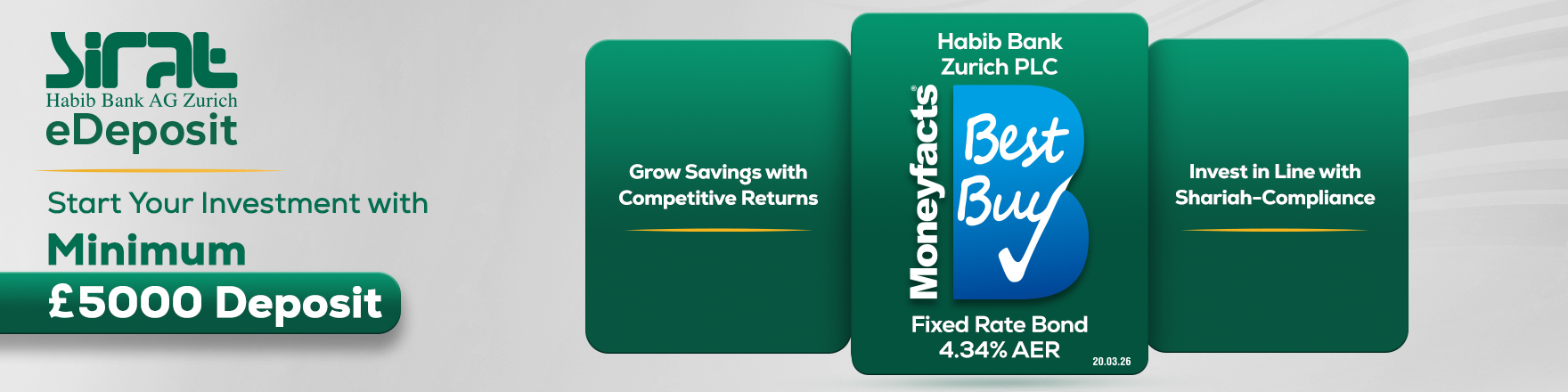
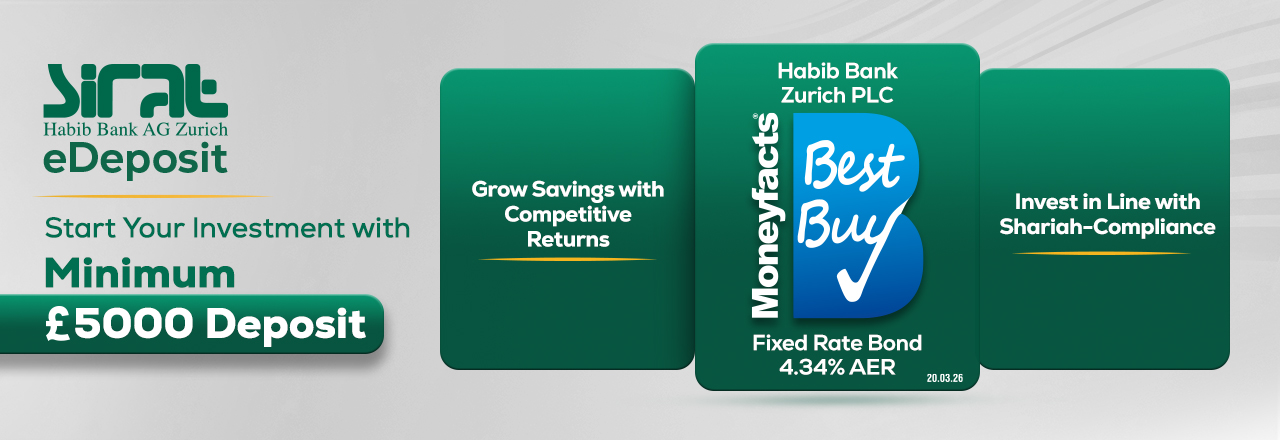
Habib Bank Zurich plc HBZ Sirat e-Deposit Account
In the UK, the first £120,000 of savings per person is protected by the Financial Services Compensation Scheme. Some banking brands share the same banking licence which means your deposit protection is across all brands sharing the licence. If you have also borrowed from the failed bank/building society, the compensation will not be reduced to repay your debt, separate arrangements will be made for this. The deposits of most businesses are covered up to the £120,000 limit, but businesses should check with their bank before they apply as there are exclusions.


QIB (UK) Raisin UK - 1 Year Fixed Term Deposit
In the UK, the first £120,000 of savings per person is protected by the Financial Services Compensation Scheme. Some banking brands share the same banking licence which means your deposit protection is across all brands sharing the licence. If you have also borrowed from the failed bank/building society, the compensation will not be reduced to repay your debt, separate arrangements will be made for this. The deposits of most businesses are covered up to the £120,000 limit, but businesses should check with their bank before they apply as there are exclusions.

Bank of London and The Middle East 1 Year Premier Deposit Account
In the UK, the first £120,000 of savings per person is protected by the Financial Services Compensation Scheme. Some banking brands share the same banking licence which means your deposit protection is across all brands sharing the licence. If you have also borrowed from the failed bank/building society, the compensation will not be reduced to repay your debt, separate arrangements will be made for this. The deposits of most businesses are covered up to the £120,000 limit, but businesses should check with their bank before they apply as there are exclusions.
Our Sirat Islamic Fixed-Term eDeposit Accounts are designed to deliver attractive returns for individuals. Your deposit is invested in accordance with Islamic principles to generate optimal returns for 6 months, 12 months, 2 Years, 3 Years and 5 Years.
AlRayan Bank Meteor Savings - 9 Month Fixed Term Deposit
In the UK, the first £120,000 of savings per person is protected by the Financial Services Compensation Scheme. Some banking brands share the same banking licence which means your deposit protection is across all brands sharing the licence. If you have also borrowed from the failed bank/building society, the compensation will not be reduced to repay your debt, separate arrangements will be made for this. The deposits of most businesses are covered up to the £120,000 limit, but businesses should check with their bank before they apply as there are exclusions.
AlRayan Bank Meteor Savings - 3 Year Fixed Term Deposit
In the UK, the first £120,000 of savings per person is protected by the Financial Services Compensation Scheme. Some banking brands share the same banking licence which means your deposit protection is across all brands sharing the licence. If you have also borrowed from the failed bank/building society, the compensation will not be reduced to repay your debt, separate arrangements will be made for this. The deposits of most businesses are covered up to the £120,000 limit, but businesses should check with their bank before they apply as there are exclusions.
Trusted by moneyfactscompare.co.uk, Kellands are chartered financial planners that specialise in quality financial planning and investment advice. Learn more about speaking to Kellands for a one hour consultation free of charge. Min. £100k in savings & investments.
AlRayan Bank Meteor Savings - 6 Month Fixed Term Deposit
In the UK, the first £120,000 of savings per person is protected by the Financial Services Compensation Scheme. Some banking brands share the same banking licence which means your deposit protection is across all brands sharing the licence. If you have also borrowed from the failed bank/building society, the compensation will not be reduced to repay your debt, separate arrangements will be made for this. The deposits of most businesses are covered up to the £120,000 limit, but businesses should check with their bank before they apply as there are exclusions.
AlRayan Bank Meteor Savings - 1 Year Fixed Term Deposit
In the UK, the first £120,000 of savings per person is protected by the Financial Services Compensation Scheme. Some banking brands share the same banking licence which means your deposit protection is across all brands sharing the licence. If you have also borrowed from the failed bank/building society, the compensation will not be reduced to repay your debt, separate arrangements will be made for this. The deposits of most businesses are covered up to the £120,000 limit, but businesses should check with their bank before they apply as there are exclusions.
AlRayan Bank Meteor Savings - 2 Year Fixed Term Deposit
In the UK, the first £120,000 of savings per person is protected by the Financial Services Compensation Scheme. Some banking brands share the same banking licence which means your deposit protection is across all brands sharing the licence. If you have also borrowed from the failed bank/building society, the compensation will not be reduced to repay your debt, separate arrangements will be made for this. The deposits of most businesses are covered up to the £120,000 limit, but businesses should check with their bank before they apply as there are exclusions.
AlRayan Bank Raisin UK - 3 Year Fixed Term Deposit
In the UK, the first £120,000 of savings per person is protected by the Financial Services Compensation Scheme. Some banking brands share the same banking licence which means your deposit protection is across all brands sharing the licence. If you have also borrowed from the failed bank/building society, the compensation will not be reduced to repay your debt, separate arrangements will be made for this. The deposits of most businesses are covered up to the £120,000 limit, but businesses should check with their bank before they apply as there are exclusions.
AlRayan Bank Raisin UK - 6 Month Fixed Term Deposit
In the UK, the first £120,000 of savings per person is protected by the Financial Services Compensation Scheme. Some banking brands share the same banking licence which means your deposit protection is across all brands sharing the licence. If you have also borrowed from the failed bank/building society, the compensation will not be reduced to repay your debt, separate arrangements will be made for this. The deposits of most businesses are covered up to the £120,000 limit, but businesses should check with their bank before they apply as there are exclusions.
*Data updated hourly, every day between 9am and 5pm.
Applicant's must be a UK resident. Eligible UK deposits are protected up to £120,000 per person by the FSCS. Rates can change at any time - please check terms before applying. Some links (like ‘Go to Provider’ or ‘Speak to a Broker’) may earn us a commission. Use the heart icon to save favourites for 14 days (cookies required).
Who owns whom?
Find out which banks and savings account providers operate under which banking license with our who owns whom guide, helping savers work out to what degree their savings are protected by the FSCS.
In many ways, Shari’ah, or Sharia, savings accounts work like any other standard savings account. However, the main difference is that, unlike mainstream savings providers, Shari’ah-compliant providers pay an “expected profit rate” instead of interest.
This is because, according to Islamic law, paying and earning interest is forbidden, or haram.
Shari’ah-compliant accounts are often viewed as an “ethical” form of saving (because deposits aren’t used in restricted industries or businesses that may be considered harmful), so they may appeal to many different savers, regardless of their religious belief.
There are easy access accounts and fixed rate bonds that comply with Shari’ah law, as well as Individual Savings Accounts (ISAs).
The expected profit rate tells you the return you can expect to receive on your savings over one year and will be based on the profit the provider makes.
Providers will generate profit by using and investing money deposited into savings in a Shari’ah-compliant way, avoiding industries that may be considered harmful, and pay their customers a portion of this profit.
While the profit rate isn’t completely guaranteed as it’s dependent on the profit the provider makes, most accounts will pay the advertised return. Indeed, several providers state that they have never defaulted on their agreed expected profit rate.
If a provider thinks it won’t be able to pay out the expected profit rate, it should contact you. It may give you the choice of keeping your money in the account at a lower rate or closing the account and keeping the profit your money has earned already.
When looking for a halal savings account, UK customers can compare the best expected profit rates using our chart above.
The key difference between a standard savings account and an Islamic savings account is that a standard account pays interest whereas an Islamic (or Shari’ah) account pays an expected profit rate.
Despite this difference, Shari’ah savings accounts and standard savings accounts both display an annual equivalent rate (AER) to help you compare accounts and decide which ones to choose.
Islamic banks and standard banks also have different rules when it comes to how they use the money that savers deposit.
Standard savings providers may lend and invest money across a range of industries and sectors to give savers a return on their money.
However, Shari’ah-compliant providers will only use money in a way that adheres to Islamic law. For example, they will only invest in ethical, Shari’ah-compliant activities, such as property and metals, and won’t put their money into high-risk speculative schemes or sectors such as gambling, alcohol and tobacco.
These providers will typically have an advisory body that ensures all their activities are Shari’ah-compliant.
Learn more in our guide to Shari'ah banking.
As with any savings account, it’s important to consider a range of features when choosing a Shari’ah-compliant account.
The expected profit rate will be one of the main factors savers look at, as this will determine how much of a return they could get on their money. You may find that Shari’ah-compliant accounts often feature near the top of our savings charts and offer a competitive return, but this isn’t always the case.
However, as well as the expected return, you should look at:
See our chart above to compare the best Islamic savings accounts UK providers currently offer. Bear in mind that, while these accounts may be known as “Islamic” accounts and follow Islamic (or Shari’ah) laws, they are open to savers of any (or no) religious belief.
Alternatively, you can view our standard savings chart pages to see how Shari’ah-compliant accounts compare to other options. All the Shari’ah savings accounts will say “expected rate” under the AER.
Yes, it’s possible to find Shari’ah-compliant cash ISAs.
Although Shari’ah savings accounts pay profit (rather than interest), any returns will still count towards your Personal Savings Allowance and could be taxed – particularly if you hold a large balance and/or earn a high rate. For more information, view our guide on how your savings are taxed.
With an Islamic cash ISA, any profit is automatically tax-free. However, keep in mind you can only deposit up to £20,000 in cash ISAs each tax-year (and that this threshold will fall to £12,000 for those under the age of 65 from April 2027). Learn more with our guide on the annual ISA allowance.
Money in a Shari’ah savings account with a UK provider is as safe as money in any other regulated savings account.
All Shari’ah savings providers should be regulated by the Financial Conduct Authority (FCA) and the money you deposit with a provider (up to £120,000) is protected by the Financial Services Compensation Scheme (FSCS).
The FSCS will cover any losses up to this amount should the provider go bust, for example. Bear in mind that some providers share a banking licence, which means the £120,000 limit will apply to your total deposits across all these brands.
Anyone can open a Shari’ah savings account, regardless of their religious beliefs. Although they abide by Islamic laws and principles, these accounts are not restricted to Muslims and are open to all savers.
Because Shari’ah providers only invest in certain industries, savers looking for an ethical option for their money may be particularly interested in these accounts.
As with standard savings accounts, to open a Shari’ah savings account you will often need to be at least 18 years old, provide some form of ID (such as a driving licence) and deposit a minimum sum into the account.
There are several providers operating in the UK that offer Islamic savings accounts, including:
View our chart above for a more comprehensive list of Shari’ah-compliant savings accounts available from UK providers.
A provider should be in contact if it can no longer pay the expected profit rate advertised. Some may offer you the choice between:


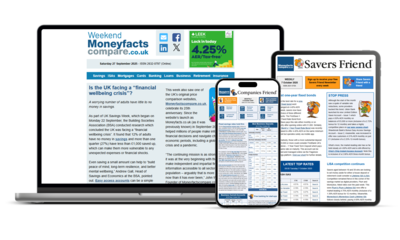
All of our newsletters are available free by email to all Moneyfactscompare.co.uk users.
Send me Weekend Moneyfactscompare, Savers Friend, and Companies Friend.

Moneyfactscompare.co.uk will never contact you by phone to sell you any financial product. Any calls like this are not from Moneyfacts. Emails sent by Moneyfactscompare.co.uk will always be from news@moneyfacts-news.co.uk. Be ScamSmart.
Moneyfactscompare.co.uk will never contact you by phone to sell you any financial product. Any calls like this are not from Moneyfacts. Emails sent by Moneyfactscompare.co.uk will always be from news@moneyfacts-news.co.uk. Be ScamSmart.
Moneyfactscompare.co.uk will never contact you by phone to sell you any financial product. Any calls like this are not from Moneyfacts. Emails sent by Moneyfactscompare.co.uk will always be from news@moneyfacts-news.co.uk. Be ScamSmart.
Moneyfactscompare.co.uk will never contact you by phone to sell you any financial product. Any calls like this are not from Moneyfacts. Emails sent by Moneyfactscompare.co.uk will always be from news@moneyfacts-news.co.uk. Be ScamSmart.
Moneyfactscompare.co.uk will never contact you by phone to sell you any financial product. Any calls like this are not from Moneyfacts. Emails sent by Moneyfactscompare.co.uk will always be from news@moneyfacts-news.co.uk. Be ScamSmart.
Moneyfactscompare.co.uk will never contact you by phone to sell you any financial product. Any calls like this are not from Moneyfacts. Emails sent by Moneyfactscompare.co.uk will always be from news@moneyfacts-news.co.uk. Be ScamSmart.
_All_125x100.png)
(24271)_Savings_125x100.png)
_All_125x100.png)
_Savings_MeteorSavings-9MonthFixedTermDeposit(106060)_125x100.png)
_Savings_MeteorSavings-3YearFixedTermDeposit(106057)_125x100.png)

_Savings_MeteorSavings-6MonthFixedTermDeposit(106059)_125x100.png)
_Savings_MeteorSavings-1YearFixedTermDeposit(106055)_125x100.png)
_Savings_MeteorSavings-2YearFixedTermDeposit(106056)_125x100.png)
_Savings_RaisinUK-3YearFixedTermDeposit(106043)_125x100.png)
_Savings_RaisinUK-6MonthFixedTermDeposit(106034)_125x100.png)
