



Find out how to make your money work harder this UK Savings Week.
Many households are missing valuable opportunities to boost their cash, with the Bank of England estimating that around £300 billion is languishing in accounts earning no interest. If this money was instead deposited in a savings account paying 4.00%, savers could become a combined total of £12 billion better off per year, analysis by Moneyfactscompare.co.uk has revealed.
“Amid a cost of living crisis, every pound counts,” said Rachel Springall, Finance Expert at Moneyfactscompare.co.uk. “Billions of pounds are being lost in savings interest, making it essential for consumers to take a step back and see how they can make their money work harder,” she explained.
With today marking the start of UK Savings Week, savers are being encouraged now more than ever to review their accounts and savings habits.

It doesn’t take much to start saving; some accounts can be opened online in a matter of minutes and only require a small amount of disposable income.
“Saving little and often is the key to building a healthy nest egg,” said Springall, but added than “an even bigger difference can be made by putting spare payday cash into an inflation-busting savings account”. In particular, she explained that easy access accounts are a “firm favourite” among savers who want the option to add to and withdraw from their pot as and when needed.
But, while some might find it convenient to open a savings account with their main bank, they’re warned that this oversight could come at a cost. A selection of the most flexible easy access accounts from big UK banks offer just 1.16%* on average and are unable to keep up with the rate at which costs are rising. Only last week it was revealed that UK inflation accelerated to 3.1% in the year to August – and could climb even higher in the months ahead.
By contrast, some of the most competitive easy access accounts offer 4.00% or more – especially if savers are willing to consider potentially less-familiar brands. However, it’s important to check an account’s terms and conditions carefully before applying, as sometimes there are limits on penalty-free withdrawals.
“Saving can feel like just like another thing to find money for when you’re juggling rent, bills and everything else that comes with working life,” said Andrew Gall, Head of Savings, Consumer and Insight at the Building Societies Association (BSA). However, he added that “a savings buffer can make a real difference when life doesn’t go to plan”.
In fact, households with £2,000 in savings have around 60% lower odds of falling behind on household bills, according to research from the University of Bristol’s Personal Finance Research Centre commissioned by the BSA. “But £2,000 doesn’t have to be the starting goal,” said Gall. “Building a savings habit, even with small amounts, can make a real difference over time,” he continued. For instance, those with only between £200 and £499 in savings are significantly less likely to face financial hardship (8%) compared to those with less than this amount (24%), the research revealed.
Millions of people are expected to move up the tax ladder over the coming years due to a combination of wage inflation and frozen tax bands (a process known as fiscal drag). Not only does this mean they’ll face a higher rate of income tax, but some may also find themselves paying tax on their savings interest – adding to their financial burden.
Although the Personal Savings Allowance (PSA) enables basic-rate taxpayers to earn up to £1,000 in tax-free interest each year, this amount gets slashed to just £500 for higher-rate taxpayers (while additional-rate taxpayers don’t receive an allowance at all). Any interest above these thresholds is currently taxed in line with a saver’s usual rate of income tax (but is set to rise by two percentage points from 6 April 2027).
Springall explained that “this is why cash ISAs will continue to be a huge help for savers trying to shield their hard-earned cash from tax”. Cash ISAs work in much the same way as traditional savings accounts, but any interest is automatically tax-free.
However, she warned that ISAs are set to become more complex from next year. For example, while savers can currently put away a combined total of £20,000 across all ISAs per tax-year, those under the age of 65 will only be able to allocate up to £12,000 of their allowance to cash ISAs from 2027/28. “In light of the current situation for savers and upcoming changes, seeking advice is wise to take full advantage of eligible allowances,” Springall concluded.
Our savings and ISA charts are regularly updated throughout the day so you can easily find and compare the best rates available.
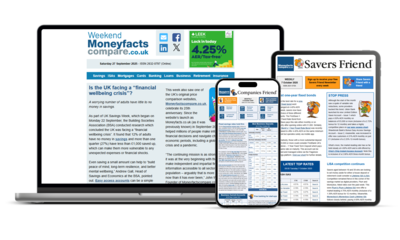
You can also check out our weekly savings and ISA roundups for more information on some of the most competitive accounts and subscribe to our Savers Friend newsletter to get weekly updates on the savings market delivered directly to your inbox.
*Big bank easy access selection: Barclays Bank, Everyday Saver, 1.00%. HSBC, Flexible Saver, 1.04%. Lloyds Bank, Easy Saver, 0.75%. NatWest, Flexible Saver, 1.00%. Santander Easy Access Saver, 2.00%.

All of our newsletters are available free by email to all Moneyfactscompare.co.uk users.
Send me Weekend Moneyfactscompare, Savers Friend, and Companies Friend.
Information is correct as of the date of publication (shown at the top of this article). Any products featured may be withdrawn by their provider or changed at any time. Links to third parties on this page are paid for by the third party. You can find out more about the individual products by visiting their site. Moneyfactscompare.co.uk will receive a small payment if you use their services after you click through to their site. All information is subject to change without notice. Please check all terms before making any decisions. This information is intended solely to provide guidance and is not financial advice. Moneyfacts will not be liable for any loss arising from your use or reliance on this information. If you are in any doubt, Moneyfacts recommends you obtain independent financial advice.


Moneyfactscompare.co.uk will never contact you by phone to sell you any financial product. Any calls like this are not from Moneyfacts. Emails sent by Moneyfactscompare.co.uk will always be from news@moneyfacts-news.co.uk. Be ScamSmart.
Moneyfactscompare.co.uk will never contact you by phone to sell you any financial product. Any calls like this are not from Moneyfacts. Emails sent by Moneyfactscompare.co.uk will always be from news@moneyfacts-news.co.uk. Be ScamSmart.
Moneyfactscompare.co.uk will never contact you by phone to sell you any financial product. Any calls like this are not from Moneyfacts. Emails sent by Moneyfactscompare.co.uk will always be from news@moneyfacts-news.co.uk. Be ScamSmart.
Moneyfactscompare.co.uk will never contact you by phone to sell you any financial product. Any calls like this are not from Moneyfacts. Emails sent by Moneyfactscompare.co.uk will always be from news@moneyfacts-news.co.uk. Be ScamSmart.
Moneyfactscompare.co.uk will never contact you by phone to sell you any financial product. Any calls like this are not from Moneyfacts. Emails sent by Moneyfactscompare.co.uk will always be from news@moneyfacts-news.co.uk. Be ScamSmart.
Moneyfactscompare.co.uk will never contact you by phone to sell you any financial product. Any calls like this are not from Moneyfacts. Emails sent by Moneyfactscompare.co.uk will always be from news@moneyfacts-news.co.uk. Be ScamSmart.

