




But will this respite be short-lived?
As many predicted, the annual rate of UK inflation fell to 2.6% in June from 2.8% in May, the Office for National Statistics (ONS) revealed today (22 July).
June saw tensions ease in the conflict in the Middle East, with peace talks beginning between the US and Iran. This helped motor fuel prices to drop, and inflation along with it. However, this respite isn’t predicted to last long, particularly as military strikes have since resumed in the Middle East and oil prices are rising once more.
Inflation tells us how prices of goods and services have changed. The metric used is called the Consumer Price Index (CPI), which condenses these price changes into one figure over one year – the rate of inflation. Even when inflation eases, as it did in June, this doesn’t mean prices have fallen. In fact, prices are still rising, but at a slower rate than before. To read more about what inflation is and how it’s measured, see our dedicated guide.
Next week, the Bank of England’s Monetary Policy Committee (MPC) will factor in June’s inflation figures, and the latest developments in the Middle East, into its base rate decision. There are expectations that base rate will hold firm at 3.75%, however, an increase could still be on the cards for later in the year.
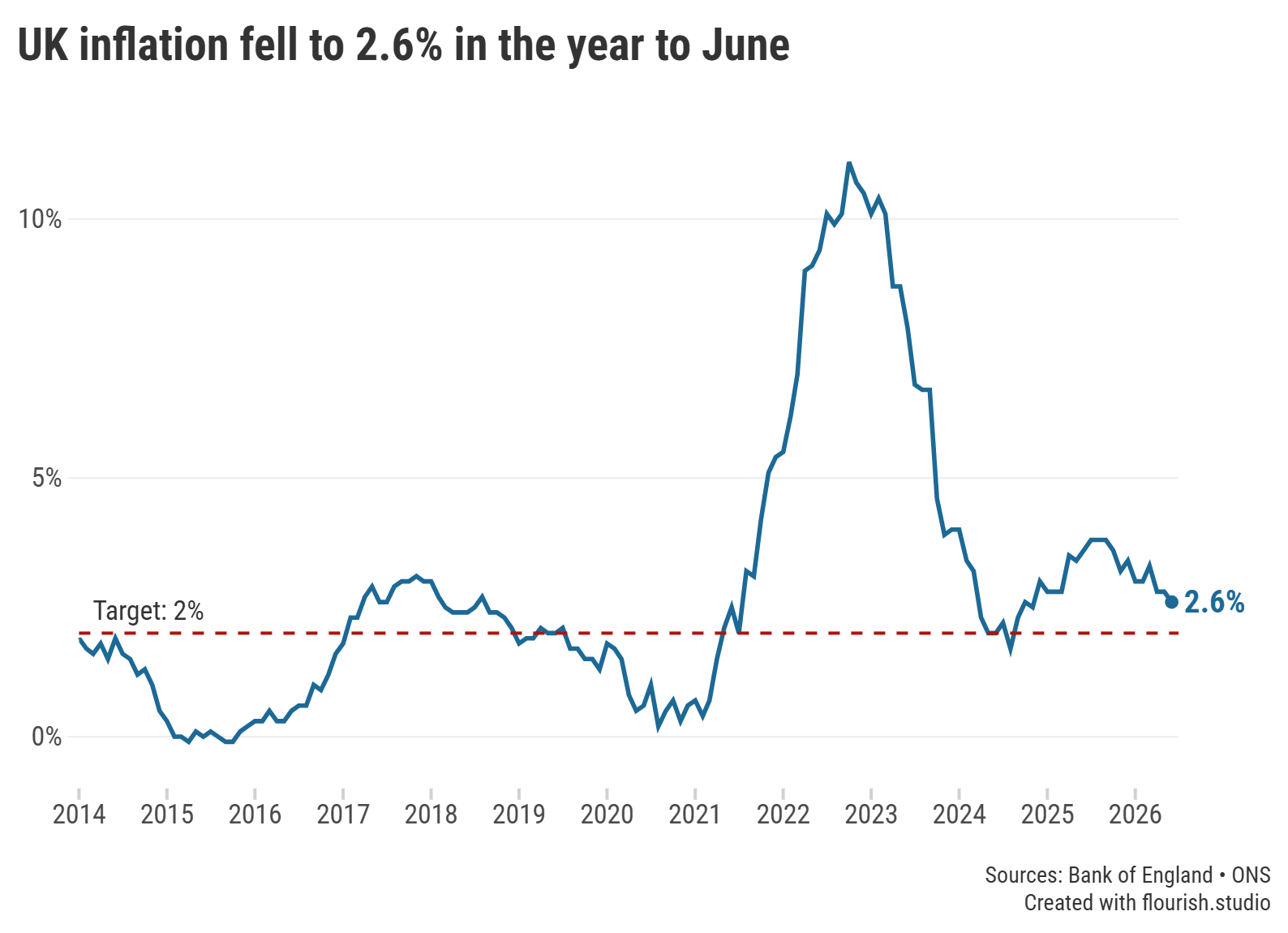
UK Finance Trends: The rate of UK inflation between 2014 and 2026.
This dip in inflation was largely driven by a drop in motor fuel prices, particularly diesel, which fell by 10.7 pence per litre between May and June 2026. Petrol prices additionally dipped by 2.1 pence per litre over the same period. Fuel prices have been high since the war in the Middle East began, with June marking the first time petrol prices have fallen since war broke out.
What’s more, food price inflation eased to 1.7% in the year to June, with a fall in the price of foods such as chocolate, confectionery, margarine, beef, dairy and vegetables making notable contributions.
While savers may be disappointed that inflation is likely to rise in the coming months, they can continue to earn returns comfortably above inflation. Encouragingly, real returns for savers are at their highest since March 2025, according to analysis by Moneyfactscompare.co.uk.
Although the cost of living continues to weigh on household budgets, “the average savings account has moved from paying 0.34 percentage points below inflation last September to 0.99 percentage points above inflation today, a swing of more than 1.3 percentage points”, Adam French, Head of Consumer Finance at Moneyfactscompare.co.uk, commented.
“For many savers, what matters most isn't whether savings rates rise or fall in isolation, but whether they stay ahead of inflation, and as things stand, they are doing just that and allowing many households to preserve or grow their purchasing power,” he continued.
At the time of analysis, 1,960 open savings accounts were paying above the CPI. Proactively shopping the market, and regularly reviewing your pots, can ensure you’re getting the best return on your money. French explained savers could take home £140 more (on a £10,000 balance) with a market-leading account than on an average account.
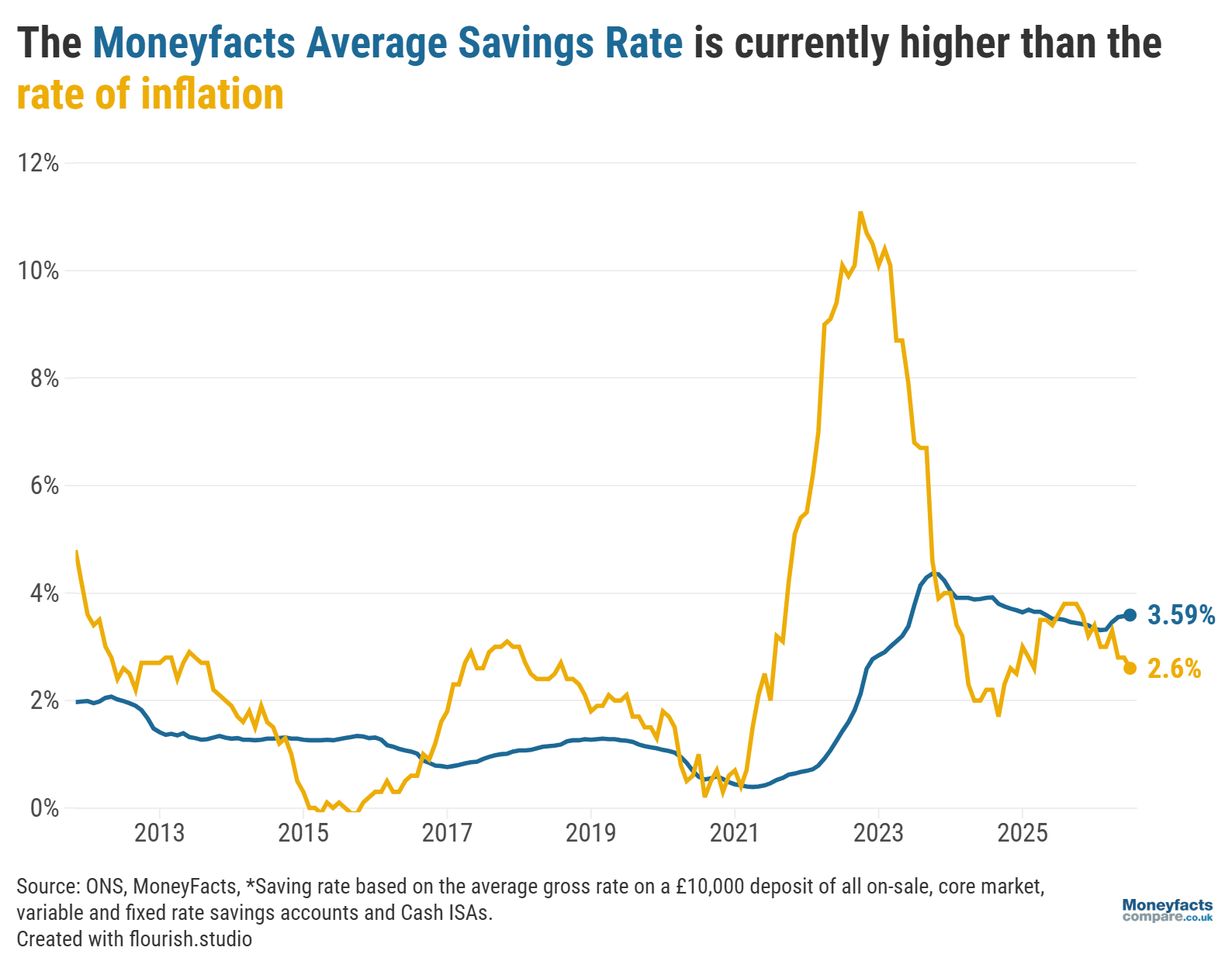
UK Finance Trends: The Moneyfacts Average New Savings Rate and the rate of inflation between 2013 and 2026.
However, household budgets could face fresh pressure from the ongoing conflict and the higher energy price cap introduced at the beginning of July. “Any subsequent increase in inflation will squeeze household budgets further and reduce the real value of savings unless providers continue to offer competitive returns,” French said.
This could make easy access accounts more attractive as savers may appreciate the typical flexibility of being able to withdraw from and add to their pots as and when they like – as opposed to locking their cash away in a fixed bond. “In uncertain and increasingly volatile economic times, maintaining both competitive returns and financial flexibility is likely to be a priority for plenty of households,” French added.
To compare the best easy access rates on the market, head to our regularly updated chart. Otherwise, those comfortable with locking their money away for longer could explore the top returns on fixed bonds. Or, for weekly updates on the savings market, see our savings and ISA roundups. Alternatively, for the latest changes delivered directly into your inbox, sign up to receive our Savers Friend newsletter for free.

All of our newsletters are available free by email to all Moneyfactscompare.co.uk users.
Send me Weekend Moneyfactscompare, Savers Friend, and Companies Friend.
Information is correct as of the date of publication (shown at the top of this article). Any products featured may be withdrawn by their provider or changed at any time. Links to third parties on this page are paid for by the third party. You can find out more about the individual products by visiting their site. Moneyfactscompare.co.uk will receive a small payment if you use their services after you click through to their site. All information is subject to change without notice. Please check all terms before making any decisions. This information is intended solely to provide guidance and is not financial advice. Moneyfacts will not be liable for any loss arising from your use or reliance on this information. If you are in any doubt, Moneyfacts recommends you obtain independent financial advice.

Moneyfactscompare.co.uk will never contact you by phone to sell you any financial product. Any calls like this are not from Moneyfacts. Emails sent by Moneyfactscompare.co.uk will always be from news@moneyfacts-news.co.uk. Be ScamSmart.
Moneyfactscompare.co.uk will never contact you by phone to sell you any financial product. Any calls like this are not from Moneyfacts. Emails sent by Moneyfactscompare.co.uk will always be from news@moneyfacts-news.co.uk. Be ScamSmart.
Moneyfactscompare.co.uk will never contact you by phone to sell you any financial product. Any calls like this are not from Moneyfacts. Emails sent by Moneyfactscompare.co.uk will always be from news@moneyfacts-news.co.uk. Be ScamSmart.
Moneyfactscompare.co.uk will never contact you by phone to sell you any financial product. Any calls like this are not from Moneyfacts. Emails sent by Moneyfactscompare.co.uk will always be from news@moneyfacts-news.co.uk. Be ScamSmart.
Moneyfactscompare.co.uk will never contact you by phone to sell you any financial product. Any calls like this are not from Moneyfacts. Emails sent by Moneyfactscompare.co.uk will always be from news@moneyfacts-news.co.uk. Be ScamSmart.
Moneyfactscompare.co.uk will never contact you by phone to sell you any financial product. Any calls like this are not from Moneyfacts. Emails sent by Moneyfactscompare.co.uk will always be from news@moneyfacts-news.co.uk. Be ScamSmart.
